
Walk-In vs Walk-Through Larder: What’s the Difference?
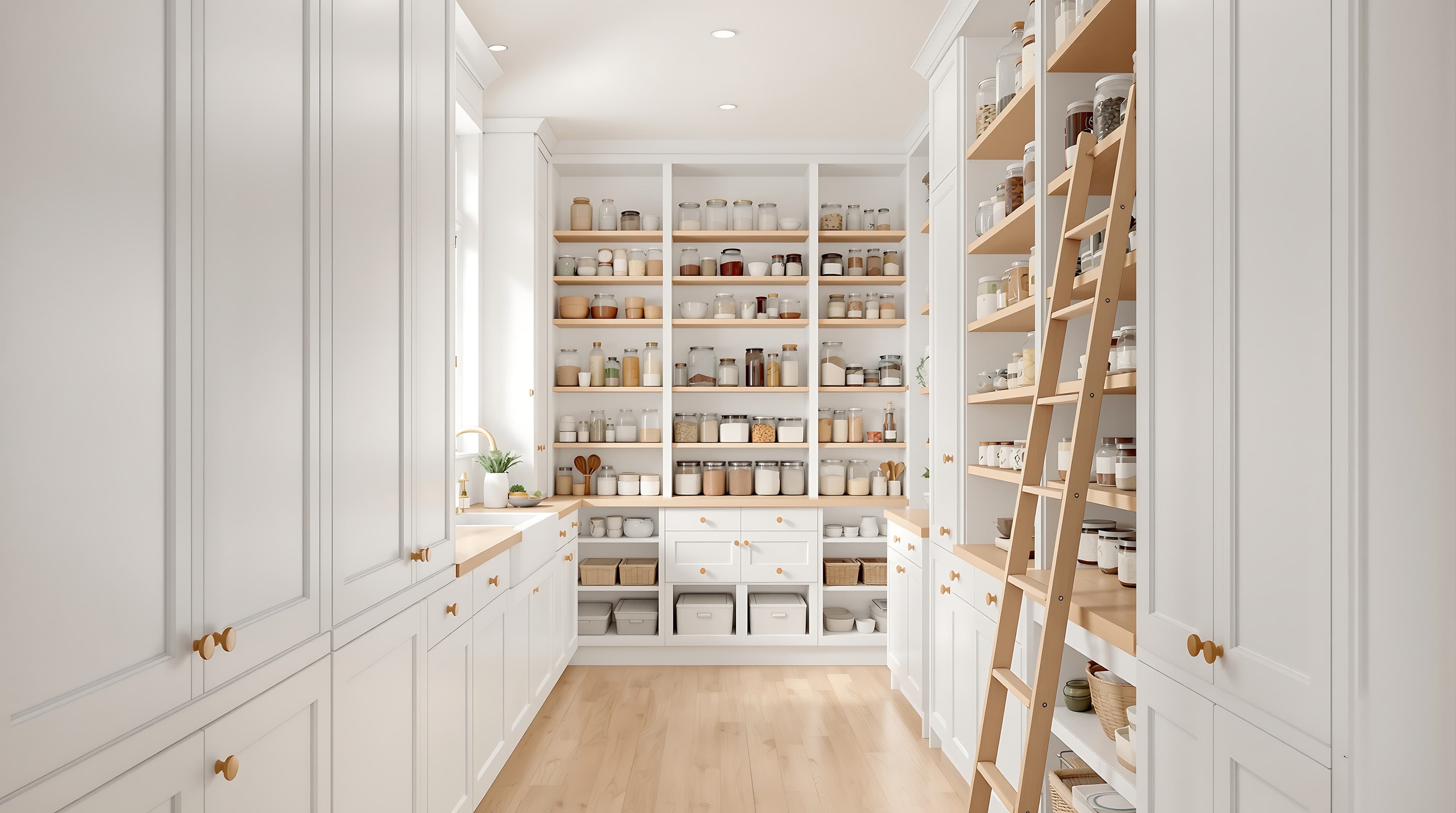
There’s a difference between “walk-in larder” and “walk-through larder”. They aren’t the same, and the difference matters more than it might first appear.
Choosing the right one for your space and habits allows the larder to become the most useful room in your kitchen. Choose the wrong one, and it becomes either an underused cupboard or something that doesn’t quite store enough.
Here at Bentley Kitchens, we design and install both regularly, and the question of which makes more sense for a given household comes up in almost every consultation. This guide, which we have put together below, explains the key differences and how to think through the decision properly.
What is a Walk-In Larder?
A walk-in larder is a dedicated storage room or large built-in cupboard that you enter, browse, and leave again through the same opening.
The inside layout typically wraps around three walls, with the entry door taking up the fourth. Almost every inch of the perimeter earns its keep, with shelves, drawers, baskets and occasional small worktop space. The remaining floor space lets you stand, scan and reach.
In practise, walk-in larders work brilliantly when you have:
· A relatively self-contained nook or alcove off the main kitchen
· A genuine appetite for stocking the cupboards properly
· A household where pantry restocking is its own job, separate from the daily cook
It’s a place where you go to do something specific. It suits households where the larder is part of the routine rather than constantly part of the cooking flow.
.jpeg)
What is a Walk-Through Larder?
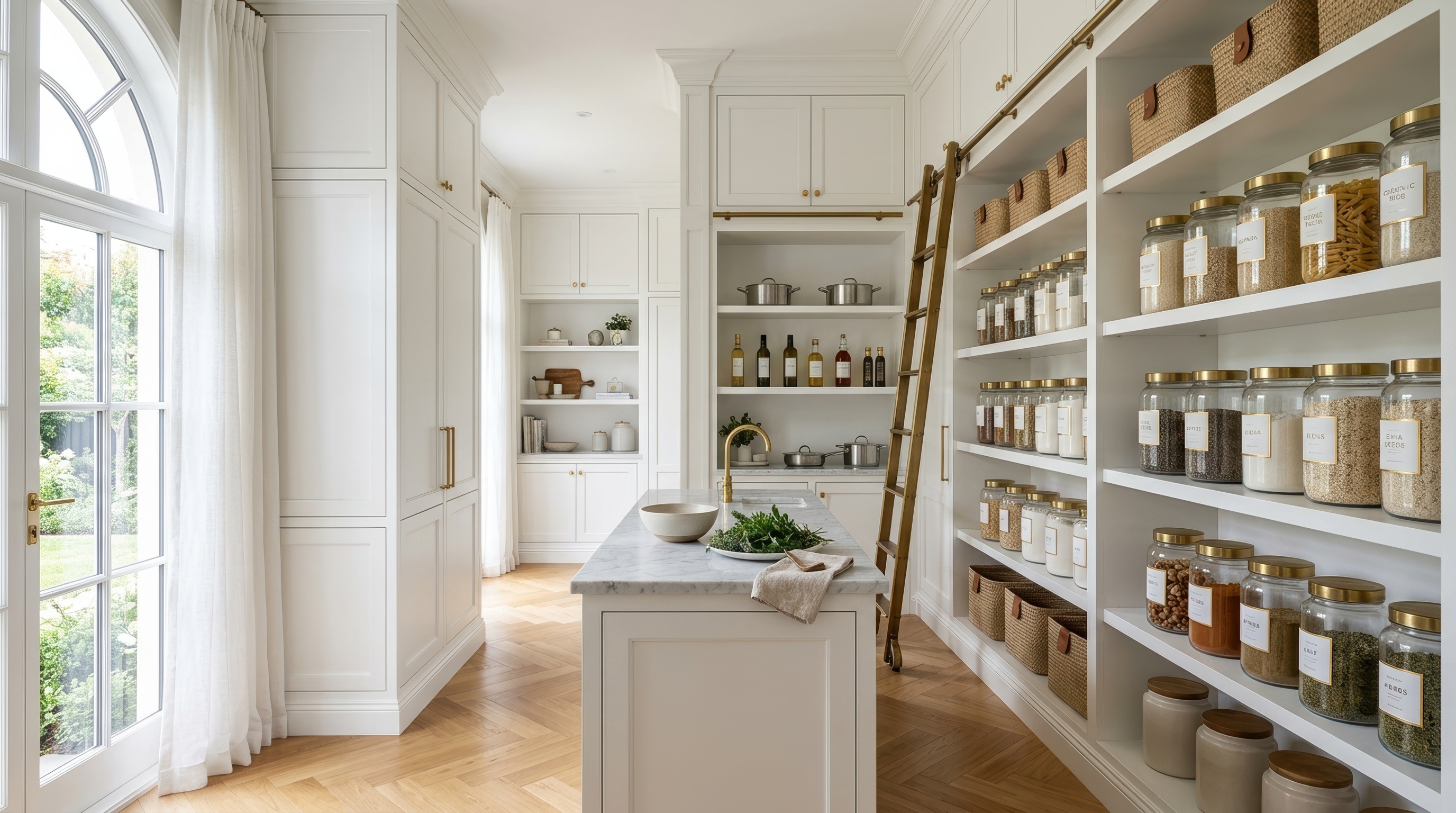
A walk-through larder, by contrast, has two openings. You enter from one side and exit from the other. It doesn’t sit at the end of the journey; it sits along one.
Most often, the walk-through larder connects the kitchen to another space: a utility room, a boot room, or a dining room. The larder itself becomes a transitional passage that earns its keep, filled with floor-to-ceiling storage on both sides as you pass through.
They are integrated into the daily flow of the kitchen rather than kept separate. You pass through it when you bring the shopping in. You pass through it when you go to clear plates. You pass through it on the way to the garden. Every one of these journeys becomes an opportunity to grab, put away or notice that the salt is running low.
This is where the “hidden door” element everyone is currently talking about really shines. Because the larder needs to disappear visually when you don’t want to see it, the entry from the main kitchen is often finished to continue the cabinetry seamlessly. Open it, and the room reveals itself. Close it, and it might as well not be there.
The Key Differences
We have summarised the key differences below:
· Access: a walk-in has one door, while a walk-through has two
· Position: a walk-in is typically a nook of a dedicated cupboard, whereas a walk-through sits between the kitchen and another room
· Use pattern: a walk-in is a destination, while a walk-through is part of the journey
· Storage: a walk-in usually offers more storage, whereas a walk-through is more limited due to the two openings
· Day-to-day integration: a walk-in keeps the larder slightly separate from the cooking flow, while a walk-through weaves it into everything you do
· Style impact: a walk-in is often a feature when the door is open, whereas a walk-through is most striking when the door is closed, and the seam is invisible
How Much Space Do You Need for Each?
This is the question that most often dictates the choice, regardless of preference.
A walk-in larder is achievable in a smaller footprint than you might expect. They are possible in spaces as compact as 1.2 metres wide by 1.5 metres deep. That’s enough room for a person to step in, with three walls of storage around them. The most useful maximum is roughly 2 metres by 2 metres. Beyond that, efficiency starts to suffer because items at the back become harder to reach.
A walk-through larder asks for a minimum of around 1.5 metres in width because you need genuinely clear passage between two facing runs of storage. Length is more flexible: anything from 1.5 to 4 metres works well, depending on what room sits at the far end. However, much beyond 4 metres and the larder starts to feel more like a corridor than a kitchen feature.
Therefore, the rough planning rule is straightforward. If you have a small alcove or self-contained nook, lean walk-in. If you have a functional connecting space that’s already part of the household thoroughfare, lean walk-through.
Storage Capacity and What Each Actually Fits
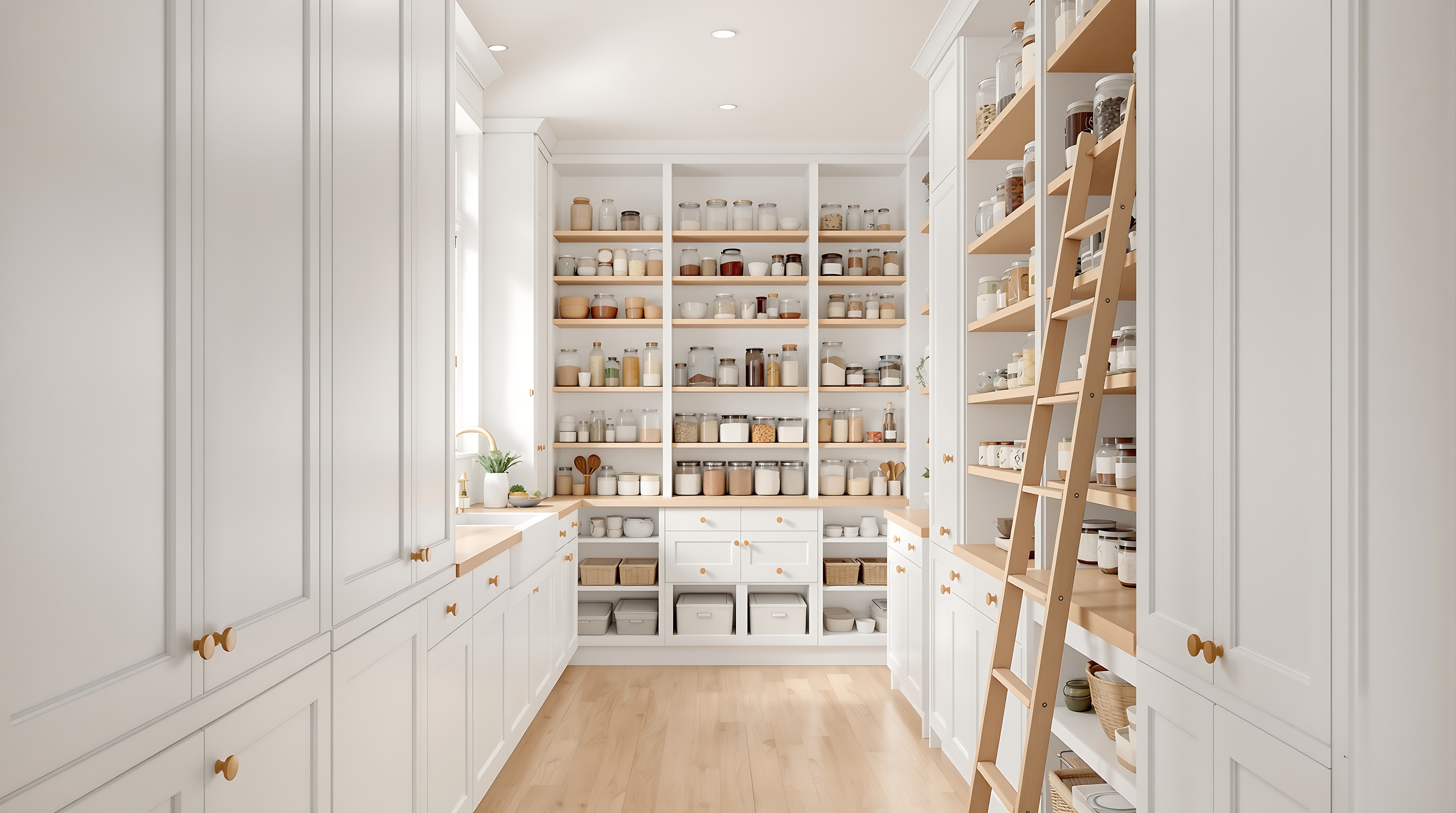
Walk-in larders generally win because of their intensive storage on three walls, including floor-to-ceiling shelving and full-depth drawers. Walk-through larders trade some of that capacity for accessibility. With two walls available rather than three, the total storage is lower. However, the storage you do have tends to be used more because you’re physically passing it multiple times a day.
From experience, families with walk-throughs use a higher proportion of their larder contents than families with walk-ins, simply because they see them constantly.
Which Suits Which Household?
Both larder types reward specific habits, and matching them honestly is the route to a kitchen you’ll actually love.
A walk-in larder tends to suit:
· Households that batch cook and bulk shop
· Anyone who entertains heavily and needs proper storage for occasion-only items
· Larger families where restocking is a regular weekend job
· Plans that already include a defined nook of dedicated room off the main kitchen
A walk-through larder tends to suit:
· Open-plan kitchens that connect to the utility or the back of the home
· Daily cooks who want their staples woven into the flow of the room
· Households drawn to the “secret door” aesthetic that’s trending right now
· Layouts where a connecting passage already exists or can sensibly be created
Neither answer is better than the other; it’s just what you and your home prefer.
The Details That Make Either One Work
Whichever route you take, the same supporting details lift a larder from functional to genuinely outstanding.
Lighting
Both layouts require proper internal lighting. Specifically, integrated LED strips under shelves, motion-activated lighting that comes on when the door opens, and warm rather than cool colour temperatures all make a noticeable difference.
Ventilation
Larders need airflow, and without it, condensation builds, food spoils faster, and the room develops that slightly stale quality.
Power
Add a few well-placed sockets for the smaller appliances like a stand mixer or coffee machine.
Worktops
A worktop gives you a place to put the shopping and prep food.
Cost Considerations
Cost varies more by specification than by type, which often surprises people.
A walk-in larder built into an existing nook, with quality fitted storage, proper lighting and a finished door, sits in a similar bracket to a small run of bespoke kitchen units.
A walk-through larder typically involves more structural work but uses less linear cabinetry overall.
In both cases, the meaningful cost variables are the depth of fit-out, the worktop choice, the lighting specification and any associated structural alterations to the surrounding kitchen.
.jpeg)
Frequently Asked Questions
What is the difference between a walk-in and a walk-through larder?
A walk-in larder has a single opening: you enter, browse and leave through the same door, with storage wrapping around three walls. A walk-through larder has two openings and forms a passage between the kitchen and another room such as a utility, boot room or dining room, with storage on the two side walls. In short, a walk-in is a destination while a walk-through is part of the journey.
How much space do you need for a walk-in larder?
A walk-in larder works in a footprint as compact as 1.2 metres wide by 1.5 metres deep, which is enough to step in with three walls of storage around you. The most useful maximum is roughly 2 metres by 2 metres; beyond that, items at the back become harder to reach and efficiency starts to suffer.
How much space do you need for a walk-through larder?
A walk-through larder needs a minimum of around 1.5 metres in width to leave genuinely clear passage between two facing runs of storage. Length is more flexible, with anything from 1.5 to 4 metres working well depending on the room at the far end. Much beyond 4 metres and it starts to feel more like a corridor than a kitchen feature.
Which larder offers more storage, walk-in or walk-through?
A walk-in larder generally offers more storage because it uses three walls, including floor-to-ceiling shelving and full-depth drawers. A walk-through trades some capacity for accessibility, with only two walls available, but households tend to use a higher proportion of a walk-through larder’s contents because they pass the shelves several times a day.
Should I choose a walk-in or a walk-through larder?
As a rough rule, choose a walk-in if you have a small alcove or self-contained nook off the kitchen, and a walk-through if you have a connecting space that's already part of the household thoroughfare. Walk-ins suit batch cooks, bulk shoppers and households that restock at weekends; walk-throughs suit open-plan kitchens and daily cooks who want their staples woven into the flow of the room.
Is a walk-in or walk-through larder more expensive?
Cost varies more by specification than by type. A walk-in built into an existing nook with quality fitted storage, lighting and a finished door sits in a similar bracket to a small run of bespoke kitchen units, while a walk-through typically involves more structural work but uses less linear cabinetry. The main cost variables are the depth of fit-out, the worktop, the lighting specification and any structural alterations.
Can I see larder options before deciding?
Yes. We design and install both walk-in and walk-through larders, and you can explore the options at our showroom in Langford, Bedfordshire. We work with homeowners across Bedfordshire, Hertfordshire, Buckinghamshire and Cambridgeshire, so bring your layout and habits and we’ll show you what is possible in your kitchen.
Visit Our Showroom
Whether you space points towards a walk-in or a walk-through, the difference between an average larder and a genuinely brilliant one comes down to design decisions made at the planning stage. Visit our showroom with your layout and habits, and we’ll show you what’s possible in your kitchen.