
Where to Site Your Outdoor Kitchen: The Practical Considerations No One Talks About
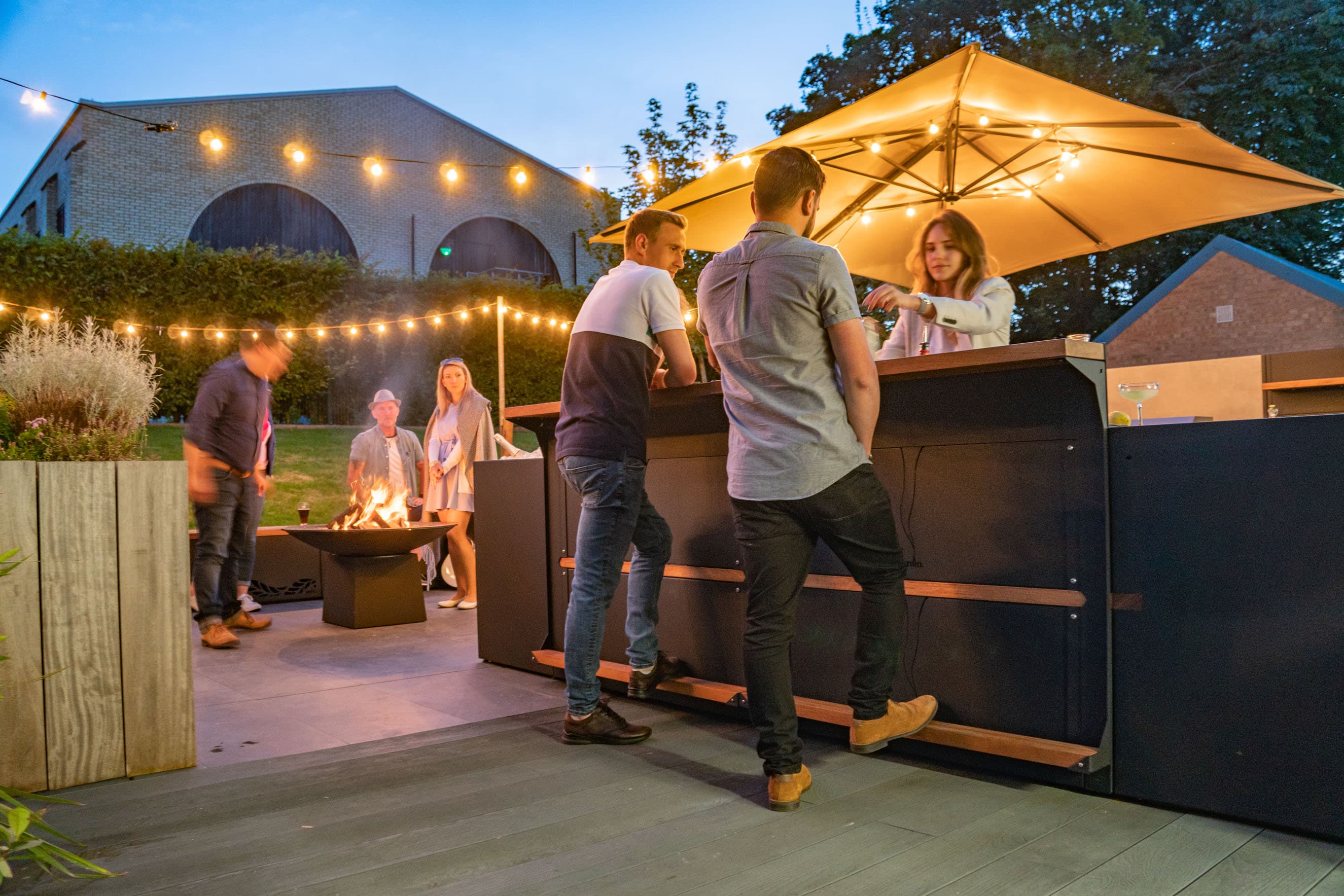
Most outdoor kitchen guides focus on the exciting bits: the cooking modules, the worktop finishes, the layout and lighting. However, the single biggest factor in whether you use your outdoor kitchen, week in and week out, is where you place it.
Getting the position right, your outdoor kitchen becomes a natural extension of how you live. Get it wrong, and it becomes the expensive thing at the bottom of the garden that only gets used in the summer months. We have created this guide to pull together the practical locations in our client’s outdoor areas.
Start With How the Garden Actually Gets Used
Before the tape measure or the compass comes out, the most useful question is also the most obvious one. How does your garden get used through a typical week?
Are you a family who eat out three nights a week from May to September but require different seating solutions from a couple who entertain 12 people at weekends? The first scenario rewards proximity to the back door. The second rewards a destination position with its own sense of place.
In practise, we encourage clients to think in zones. Where does morning coffee happen? Where do the kids gravitate towards? Where do guests naturally drift after dinner? Ideally, your outdoor kitchen sits along those existing movement lines rather than in a corner of the garden no one ever visits.
Sun, Shade and Aspect
Aspect matters quite considerably, as in the UK we only have a few good hours of sunshine to make the most of.
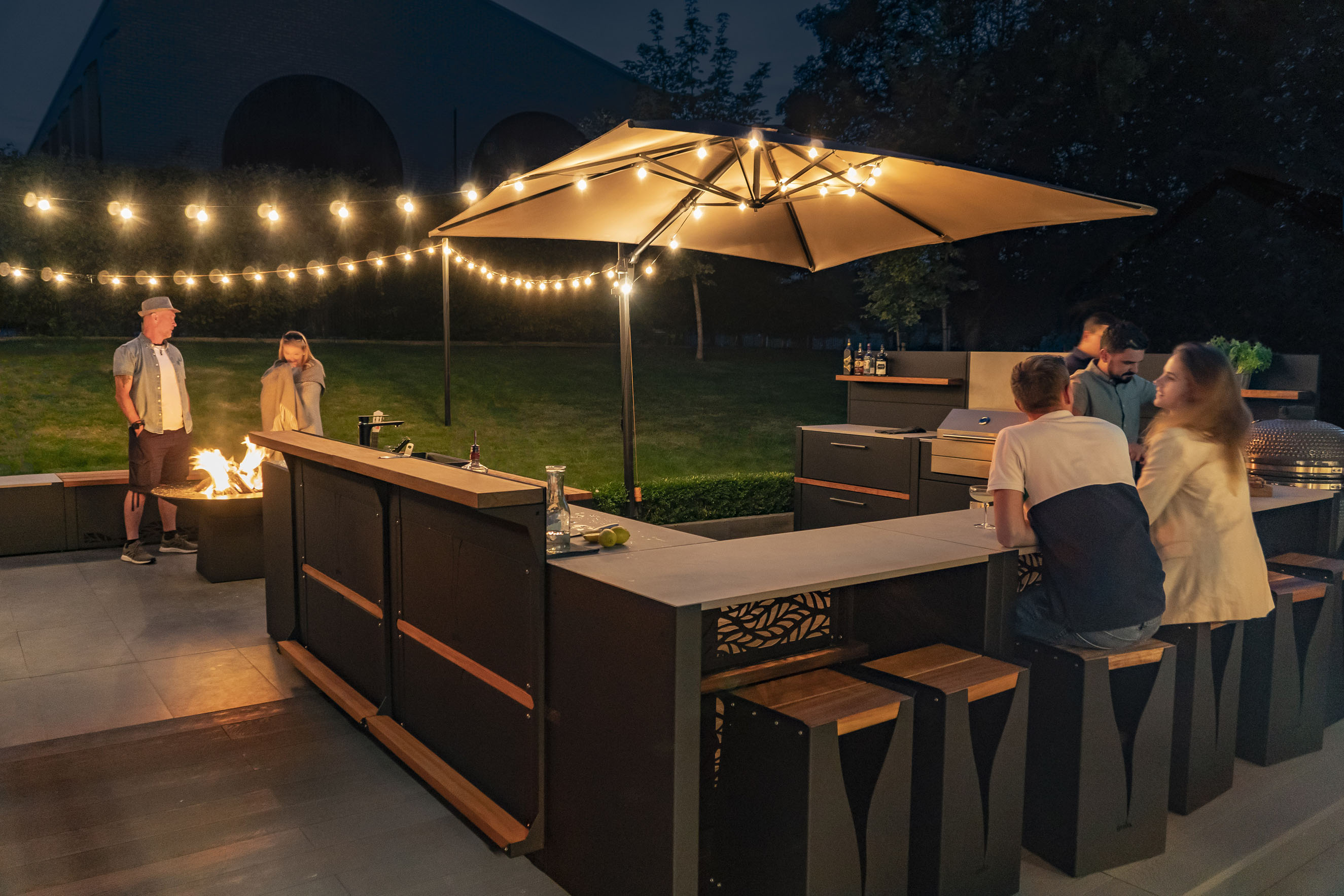
A south or south-west-facing position gets the longest run of usable daylight, particularly in the late afternoon and early evening, when most outdoor cooking happens. However, full south can be uncomfortable for the cook in mid-summer, especially when standing over a charcoal grill. Therefore, a position that catches afternoon and evening sun but offers some natural shade tends to be the sweet spot.
North-facing positions are not write-offs either. They stay cooler on hot days, which the cool will thank you for in July, and they often pick up softer evening light from the west.
East-facing suits breakfast and brunch use. West-facing suits sundowners and later dinners.
Wind Direction and Smoke Management
It doesn’t really get talked about enough as it should, but the prevailing wind across most of the UK runs from the south-east. Smoke from a grill positioned without thought drifts north-east, which is often straight towards the house or, worse, straight towards the neighbours.
There are two practical steps to help. Firstly, observe your garden through a few different weather conditions before committing. Smoke from a small bonfire, or even a stick of incense on a still day, will tell you more than any wind rose. Secondly, orient the cooking modules so the prevailing wind takes smoke away from your seating areas and your boundary lines, not towards them.
Importantly, this consideration moves from useful to essential when you specify wood-burning grills, plancha grills or pizza ovens. The smoke and heat output from these is significant, and the wrong orientation will be felt by everyone within fifty metres.
Distance From the Back Door
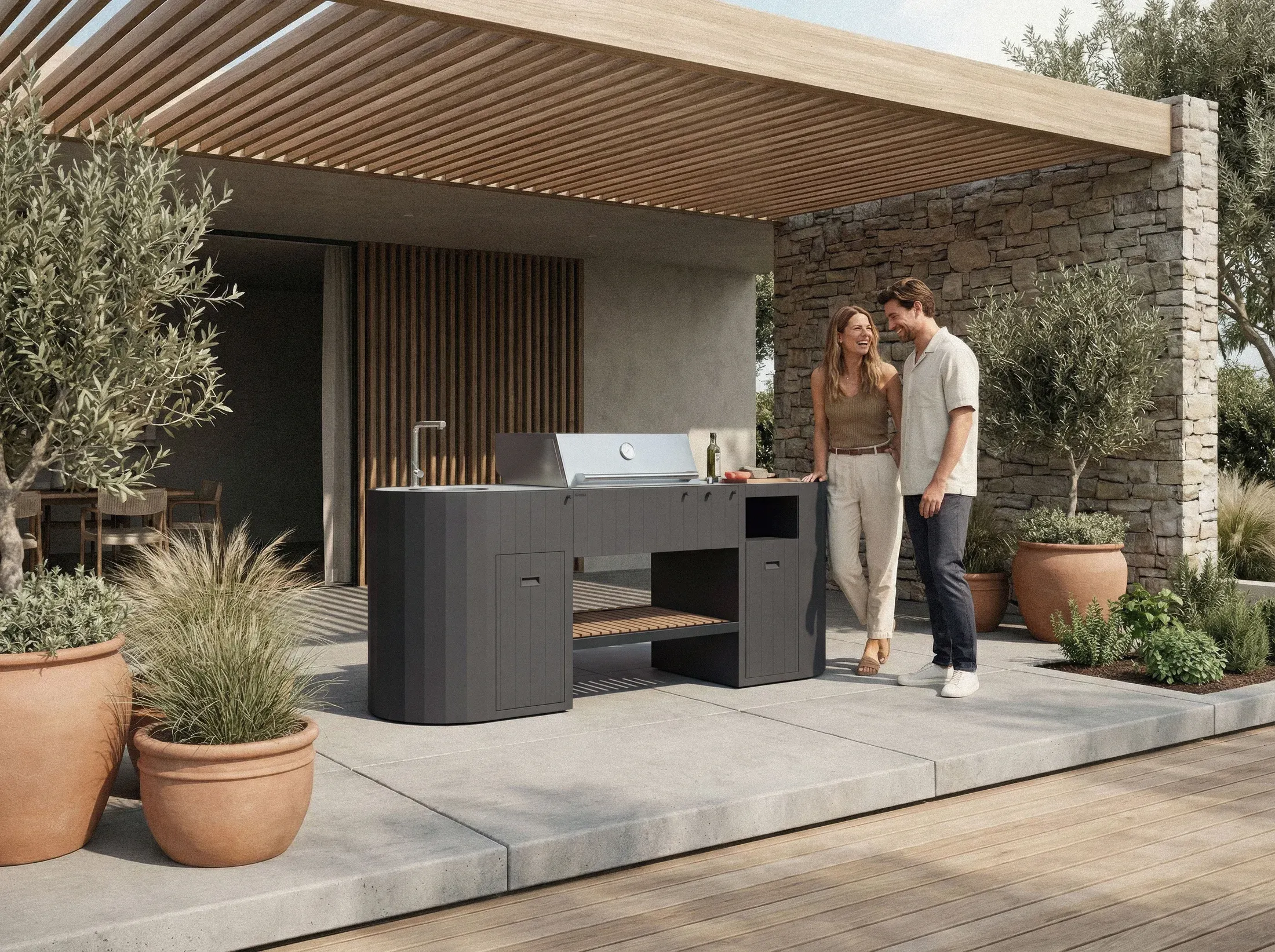
There’s a common assumption that an outdoor kitchen should sit as close to the house as possible, on the basis that you’ll need to nip back and forth. A well-specified outdoor kitchen with its own integrated fridge, sink with hot and cold running water, generous prep space and proper storage should need very little nipping at all.
That said, distance does matter in three specific ways.
Firstly, services such as running water, gas and power can add cost and complexity if you're not careful. Therefore, a position within roughly ten metres of the house, where possible, keeps the ground work straightforward.
Secondly, evening use when a kitchen is visible from the house tends to get used more often, simply because you notice it. Conversely, one tucked behind a hedge becomes a special-occasion venue.
Thirdly, weather. A position that uses the house wall for shelter (from prevailing wind or light rain) will extend your usable season noticeably at both ends.
Services: Water, Gas and Power
Outdoor kitchens with full sinks, fridges and ignition systems need real services, not just a token outdoor tap.
For water, you’ll need a hot and cold water supply with proper drainage. For gas, choose between mains gas and bottled LPG. Mains is cleaner and removes the bottle-changing chore but requires a properly run pipe and a Gas Safe registered engineer. LPG offers more flexibility in position because you’re not tethered to the house, but bottle storage needs proper planning. For electrics, a dedicated outdoor circuit on an RCD is the right approach.
We mention all this not to put anyone off, but because the position fundamentally affects how easy the services are to run. A kitchen sited near an existing utility wall might save several thousand pounds in first-fix costs. One located at the bottom of a fifty-metre garden will need a properly scoped trenching and pipework plan.
Ground Surface and Drainage
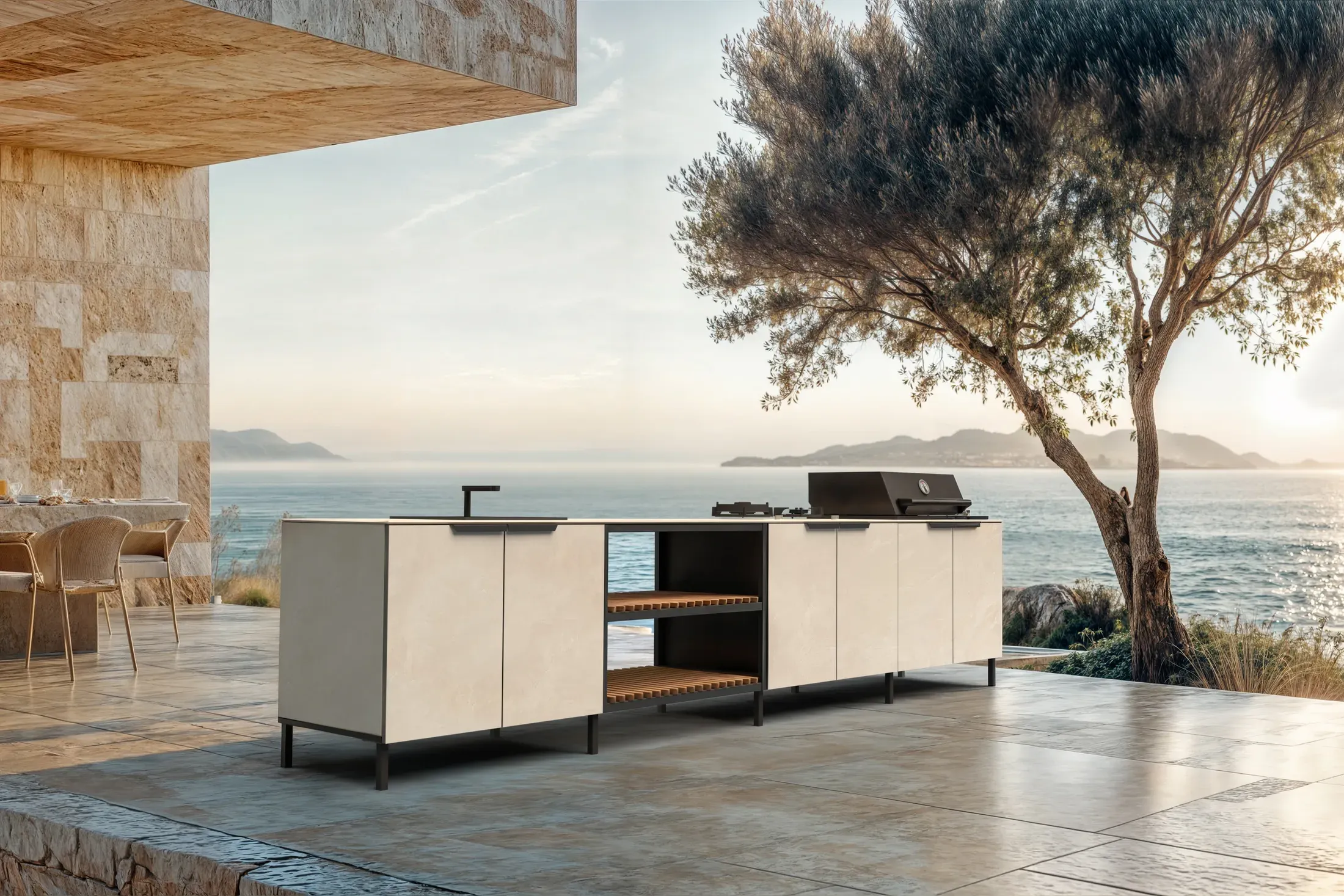
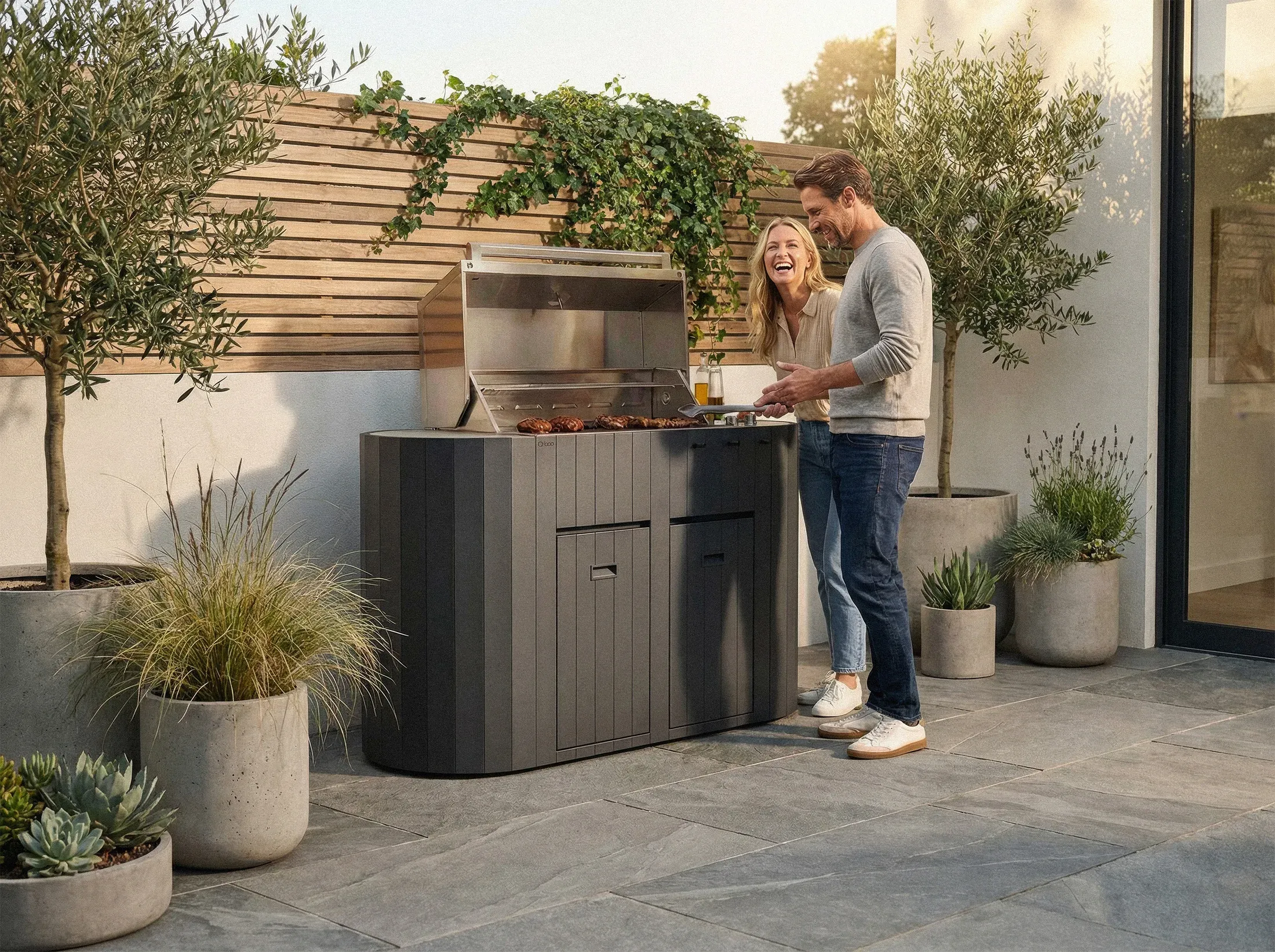
One genuine advantage of a Grillo outdoor kitchen is that it sits freestanding on any solid, level surface: no foundations, no concrete pad, no specialist groundworks. However, “any solid, level surface” still means solid and level.
A few things to check, therefore:
· Patios should be properly bedded
· Decking needs to be in good order and rated to take sustained weight
· The lawn needs additional groundworks
Drainage matters even when the kitchen itself is freestanding. Specifically, surface water needs somewhere to go around sink modules and during heavy weather.
Privacy, Neighbours and Noise
Outdoor kitchens are social places, which means voices, music, cooking smells, and the occasional cork popping can be heard or smelled. Consequently, where the kitchen sits in relation to your boundaries matters for two reasons: your privacy from neighbours, and their peace from you.
Trees, Branches and Overhead Clearance
A mature tree will provide a beautiful natural shade; however, it also drops leaves, blossom, sap, pine needles, and occasionally larger objects, all of which end up in or on the kitchen. Positioning open grills directly under tree cover poses a fire risk in dry summers, and pine and eucalyptus debris can be particularly hard to clean off the worktops.
Furthermore, any cooking module that generates significant heat needs clear overhead space.
Access For Delivery and Installation
You need to make sure the delivery route from the road to where the kitchen is going to be positioned is accessible.
We see these common problems:
· Side passages narrower than the largest module
· Steep steps
· Gates with permanent fixtures
· First-floor balconies or roof terraces accessible only via internal stairs
All of these affect the cost and timeline of the outdoor kitchen.
Planning Permission and Boundary Rules
Most freestanding outdoor kitchens fall under permitted development and don’t require planning permission. However, that’s not a universal rule, and there are specific situations where you should check first.
Permission is more likely to be required if:
· You live in a conservation area, a listed building, or an area of outstanding natural beauty
· The outdoor kitchen forms part of a larger structure that exceeds permitted development thresholds
· The installation involves paving over more than 5 square metres of front garden
· Boundary distances are tight, particularly where covered or roofed elements are involved
Building control is a separate question entirely. Gas connections must be installed by a Gas Safe registered engineer, and electrical work must comply with Part P. These all apply regardless of whether planning permission is needed.
Future-Proofing the Position
Finally, a consideration almost no one mentions: where will you want this kitchen in five years?
Outdoor kitchens often catalyse wider garden changes, so use the kitchen as the starting point and evolve the garden around it.
We suggest the following:
· Leave space on at least one side for future expansion, whether an additional module or a pizza oven extension
· Don’t position the kitchen where a pergola post would need to land
· Consider sight lines from any covered seating area you might one day add
· If a hot tub is on the long horizon, think about proximity
Frequently Asked Questions
Where is the best place to position an outdoor kitchen?
The best position catches afternoon and evening sun while offering some natural shade, sits along the routes you already use in the garden, and is within roughly ten metres of the house so services stay straightforward. In practice the ideal spot balances how your garden is actually used with sun, wind, access and drainage, rather than simply tucking the kitchen into a spare corner.
Which way should an outdoor kitchen face?
A south or south-west-facing position gives the longest run of usable daylight, particularly in the late afternoon and early evening when most outdoor cooking happens. East-facing suits breakfast and brunch, west-facing suits sundowners and later dinners, and north-facing positions stay cooler on hot days while still catching soft evening light from the west.
How do you stop barbecue smoke blowing towards the house or neighbours?
Orient the cooking modules so the prevailing wind carries smoke away from your seating and boundaries. Across most of the UK the prevailing wind runs from the south-east, so smoke from a thoughtlessly placed grill drifts north-east, often straight towards the house or the neighbours. This matters even more with wood-burning grills, planchas or pizza ovens, whose heat and smoke output is significant.
How far should an outdoor kitchen be from the house?
A position within roughly ten metres of the house keeps the groundwork for water, gas and power straightforward, and it tends to get used more often because you can see it from indoors. A well-specified kitchen with its own fridge, sink and storage needs very little nipping back and forth, so distance is more about services, visibility and shelter than convenience.
Do you need planning permission for an outdoor kitchen?
Most freestanding outdoor kitchens fall under permitted development and don't require planning permission. Permission is more likely if you live in a conservation area, listed building or area of outstanding natural beauty, if the kitchen forms part of a larger structure that exceeds permitted development thresholds, or if it involves paving over more than five square metres of front garden. Gas work must be carried out by a Gas Safe registered engineer and electrical work must comply with Part P regardless of planning.
What surface can an outdoor kitchen sit on?
A Grillo outdoor kitchen sits freestanding on any solid, level surface, with no foundations or concrete pad required. Patios should be properly bedded, decking needs to be in good order and rated for sustained weight, and a lawn position will need additional groundworks. Either way, plan for surface water to drain away around the sink modules.
Where can I plan an outdoor kitchen in person?
You can see the modules and talk through siting at our showroom in Langford, Bedfordshire. We design and install outdoor kitchens for homes across Bedfordshire, Hertfordshire, Buckinghamshire and Cambridgeshire, so bring your dimensions and photographs and we'll work through aspect, access, services and drainage for your specific garden.
Related Blogs
Choosing the Right Outdoor Kitchen Layout: Comparing Galley, L-Shape, U-Shape and Island
Visit Our Showroom
Siting decisions are easier to make on the ground than on paper, so bring us your dimensions and photographs and see the modules in person at our showroom. We’ll work through aspect, access, services and the practical details specific to your garden, then help you arrive at the position that will earn its keep for years to come. We look forward to hearing from you.