
How Long Does It Take to Fit a Kitchen? A Realistic Week-by-Week Guide
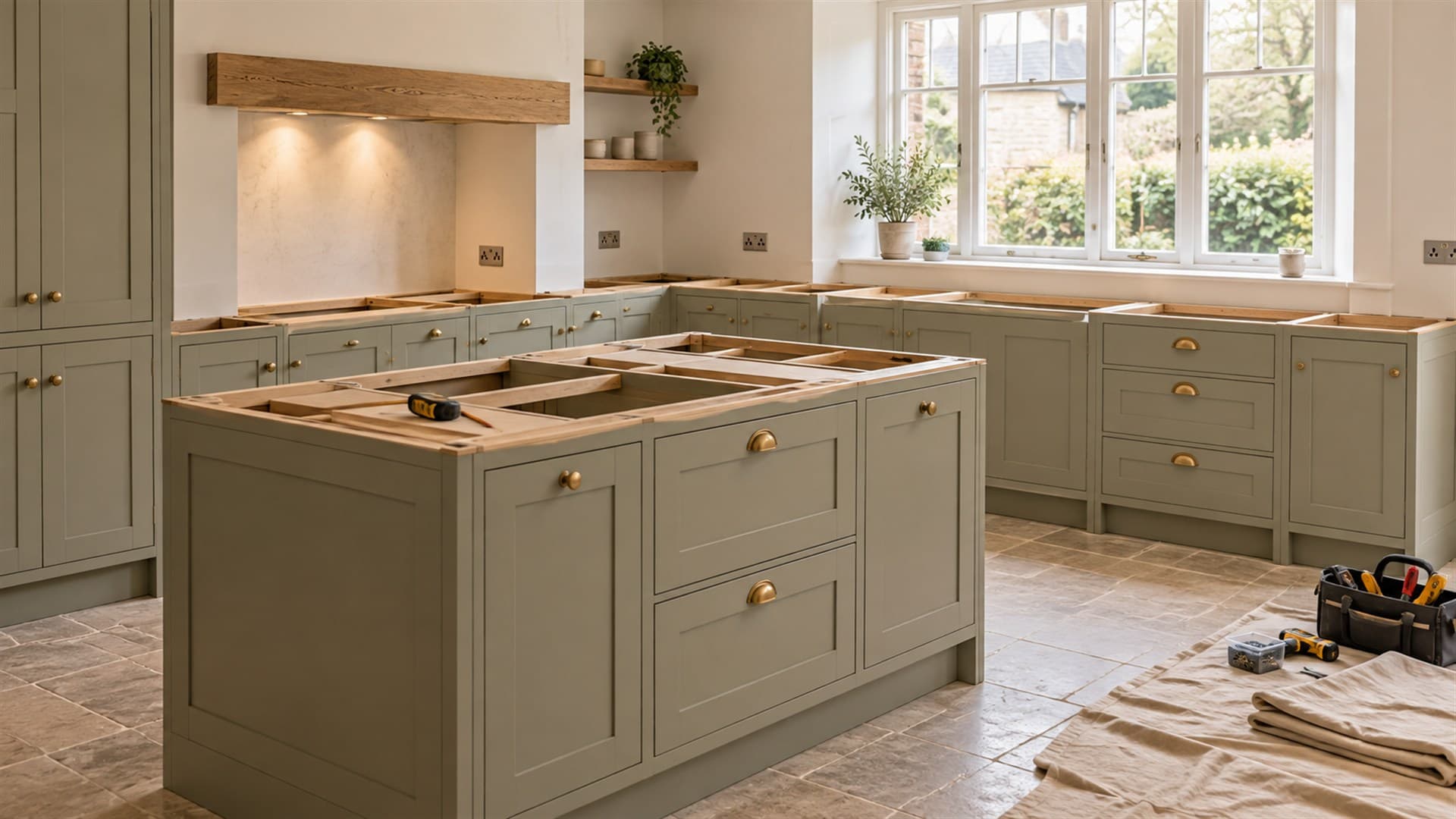
It’s the question we’re asked at almost every design visit, usually with a quick glance at the calendar: how long will we be without a kitchen? For most homes, the honest answer is two to three weeks once work starts on site. That covers everything from taking out the old kitchen to the final clean, including the plumbing, electrics, plastering, worktops, tiling and decorating.
Bigger projects take longer. Knocking through a wall, moving the sink to the other side of the room or building an extension all add time.
The fitting is only the final chapter, though. Before anyone arrives with a toolbox, your kitchen has to be designed, ordered and made, and that part usually takes longer than the installation itself. Here’s what happens and when, so you can plan around it with confidence.
The Short Answer
For a typical kitchen replacement, you can expect:
- Design and decisions: one to three weeks, depending on how quickly you settle on a layout, style and finish.
- Manufacture and delivery: several weeks after the order is placed. Your designer will confirm the lead time for your chosen range when you order.
- Installation on site: two to three weeks for most kitchens.
So from your first design visit to cooking in your new kitchen, it’s sensible to allow a couple of months, and longer if the project includes building work.
Before Anyone Picks Up a Tool
Everything that follows depends on accurate measurements, so the first step is a detailed survey of your room. Walls are rarely perfectly straight. Floors are rarely perfectly level. And pipes, sockets and boxing are never quite where the plans say they are.
From there, your designer develops the layout and you choose the range, colour, worktop, appliances and storage. We produce photo-realistic 3D designs before anything is ordered, so you can see how the room will work before you commit.
This is the stage where time spent really pays off. A change made after the order has gone in can add weeks to the project, while a change made on the design screen costs nothing at all.
Week One: Out With the Old
The first few days on site are the noisiest and the dustiest.
Removing the old kitchen. Units, worktops, appliances and tiles come out and are taken away. This usually takes a day, sometimes less.
First fix. With the room stripped back, the plumber, electrician and, if needed, a gas engineer run new pipes and cables to wherever the new layout needs them. If you want extra sockets, a moved cooker supply or a sink in a new spot, now’s the time, while everything behind the walls is still accessible.
Plastering. Walls that have been chased for cables or damaged by the old kitchen are made good. Fresh plaster needs time to dry before it can be painted or tiled, which is one reason the trades have to be sequenced so carefully.
Flooring. Depending on the floor you’ve chosen, it may go down now, before the units, so it runs neatly underneath them.
Week Two: The Kitchen Takes Shape
This is the week it starts to feel real.
Fitting the units. Base units go in first, levelled and fixed, followed by wall units, tall housings and any island. On a typical kitchen this takes a few days, with panels, plinths and cornices following on.
Templating stone worktops. If you’ve chosen quartz, granite or sintered stone, the worktops can’t be cut until the units are in place. A templater visits to take precise measurements, including the exact position of the sink and hob, and the slabs are then cut to order. Laminate and solid timber worktops are usually fitted at the same time as the units, which shortens the programme.
Week Three: The Finishing Touches
Worktops go on. Stone worktops typically arrive around one to two weeks after templating. Once they’re fitted, the sink, tap and hob can be connected.
Second fix. The electrician returns to fit sockets, switches, lighting and appliances, and the plumber connects the sink, dishwasher and washing machine.
Splashbacks and tiling. Tiles or a stone upstand go on after the worktops, so they sit neatly on top.
Decorating. Walls and ceilings are painted and any final trims are fitted.
Snagging and handover. We walk through every door, drawer and appliance with you, and anything that needs adjusting is put right before you take over the room.
What Can Slow Things Down
Two to three weeks is a realistic figure for most kitchen replacements, but a few things reliably stretch it:
- Structural work. Removing a wall between a kitchen and dining room usually means a steel beam, building control sign-off and extra making good.
- Moving services. Relocating the sink to an island or moving a gas supply adds plumbing and floor work.
- Unexpected discoveries. Old wiring that no longer meets current standards, hidden damp or uneven floors only come to light once the old kitchen is out.
- Drying times. New plaster and screeded floors need time before the next trade can follow.
- Changes once work has started. Even small changes can mean reordering parts.
- Gaps between trades. Where several separate firms are involved, the biggest delays are often the days spent waiting for the next one to turn up.
Why One Team Makes All the Difference
That last point is the one we hear about most from people who’ve been through a kitchen project before. If the kitchen company fits the units but you’re left to book your own plumber, electrician, plasterer and decorator, every handover is a chance for the programme to stall.
We manage every trade ourselves, including the plumbing, electrics, gas, plastering, tiling, flooring and decorating, so there’s one schedule and one point of contact. You’ll receive a written schedule with your quote, and because the trades are all ours, the work follows on without gaps.
Surviving a Few Weeks Without a Kitchen
A little preparation makes the fitting weeks far easier:
- Set up a temporary kitchen in another room with a kettle, microwave, toaster and a fridge if you can spare one.
- Plan simple meals and stock up on paper plates to cut down on washing up.
- Clear the room completely before the start date, including the contents of cupboards and anything on the walls.
- Protect the rest of the house. We use dust sheets and protection, but moving valuables and fragile items out of nearby rooms is still sensible.
- Agree access for each morning, including parking and where materials will be stored.
Frequently Asked Questions
How long does it take to fit kitchen units?
On a typical kitchen, fitting the units themselves takes a few days. The full installation, including first fix plumbing and electrics, plastering, worktops, tiling and decorating, usually takes two to three weeks from start to finish.
How long after templating are stone worktops fitted?
Quartz, granite and sintered stone worktops are cut to the exact template taken once your units are installed, and they’re typically fitted around one to two weeks later. Laminate and timber worktops can usually go in at the same time as the units.
Can I use my kitchen while it’s being fitted?
Not in any practical sense, we’re afraid. The old kitchen comes out on the first day, and the water and power to the room are disconnected at times during the work. Setting up a simple temporary kitchen in another room is the best approach.
Does a new kitchen need building regulations approval?
A straightforward like-for-like kitchen replacement usually doesn’t, but some of the work within it can. New electrical circuits, gas work and removing a structural wall all have their own requirements, and they must be carried out and certified by suitably qualified people. Your installer should handle this as part of the project.
Will I get a schedule before work starts?
You should, and with us you will. You’ll receive a written schedule with your quote and have a single point of contact throughout. Because we manage every trade ourselves, the programme doesn’t depend on other firms fitting us in.
Visit Our Showroom
Timelines are always easier to talk through in person. Pop down to one of our showrooms in Shefford or Langford, bring your measurements or a few photos of the room, and we’ll give you an honest view of how long your project will take. Appointments are recommended so a designer can spend proper time with you.
You can also see typical kitchen prices in our guide, or book your free design visit whenever you’re ready. We’d love to hear from you.