
Quartz vs Granite vs Sintered Stone: Choosing a Kitchen Worktop
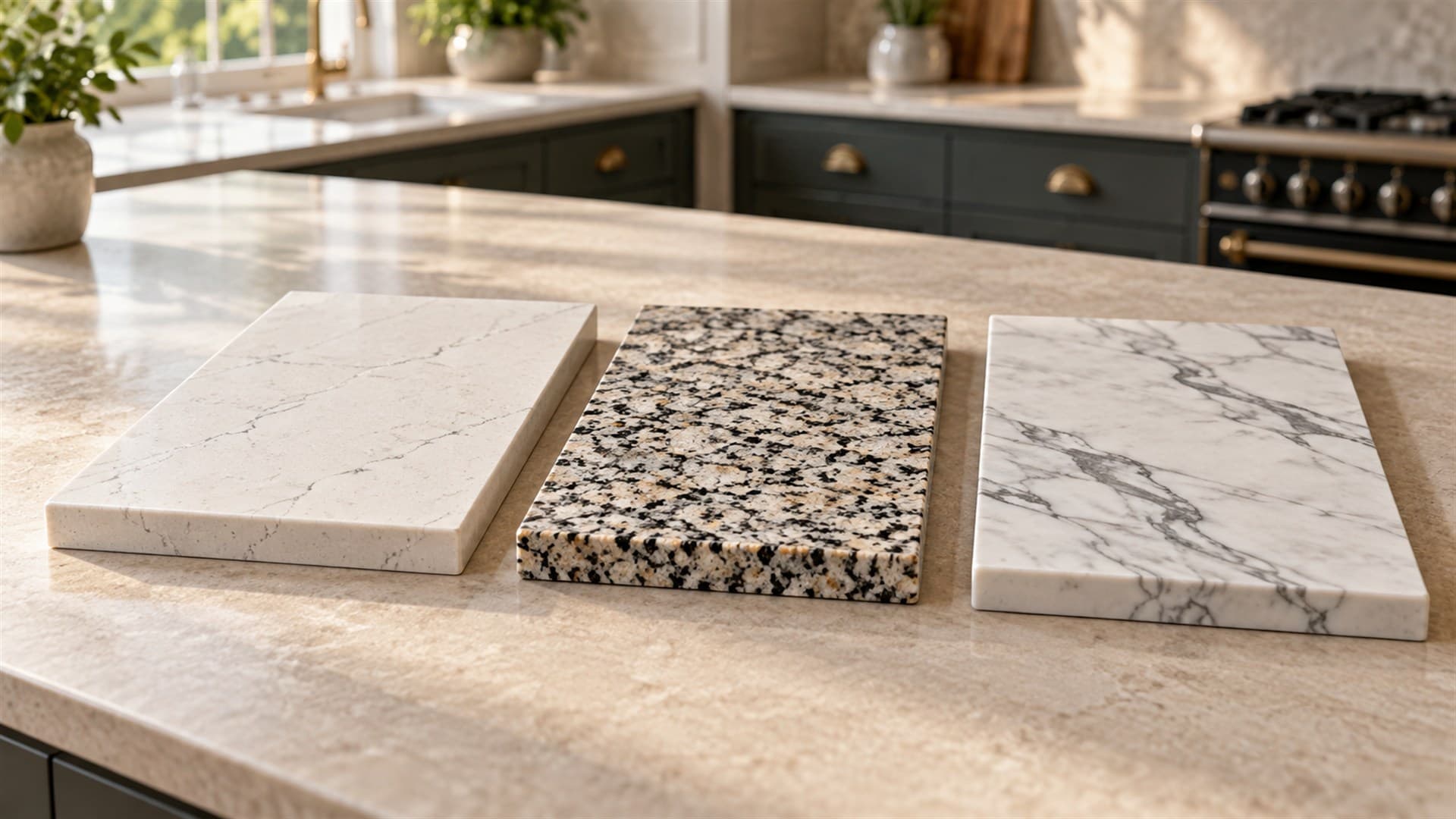
Choosing a worktop is one of the most enjoyable parts of planning a kitchen, and one of the most confusing. Walk into any showroom and quartz, granite and sintered stone can look remarkably similar. Live with them for a few years, though, and you’ll find they behave very differently.
Here’s the short version. Quartz is the easiest to live with: non-porous, consistent in colour and needing no sealing, although it should be protected from very hot pans. Granite is a natural stone with a unique pattern and excellent heat resistance, but it benefits from occasional sealing. Sintered stone is the toughest all-rounder for heat, stains and sunlight, and can even be used outdoors, though its edges need a little more care.
All three make superb worktops, and once fitted they cost broadly similar amounts. So the right choice really comes down to how you cook, how you live and the look you love.
Three Very Different Materials
Quartz
Quartz worktops are engineered. Crushed natural quartz, the main ingredient, is combined with resins and pigments and pressed into slabs. That process is what gives quartz its consistent colour, and its knack for imitating marble, concrete or plain solid colours.
Granite
Granite is a natural igneous stone, quarried in large blocks and cut into slabs. Every slab is different, with its own flecks, swirls and crystals. What you see in the showroom sample will be similar to the slab in your kitchen, but never identical, and that’s exactly the appeal.
Sintered Stone
Sintered stone is made from natural minerals, the same kind you’ll find in porcelain, glass and stone, fused together under intense heat and pressure without the resins used in quartz. The result is an extremely dense, hard surface. You may also see it described alongside large-format porcelain, as the two are closely related.
How They Compare
Heat Resistance
- Sintered stone is the most heat resistant of the three. It’s fired at very high temperatures during manufacture, so a hot pan won’t harm it.
- Granite also handles heat very well.
- Quartz is the one to be careful with. The resin that binds it can scorch or discolour if a pan goes straight from the hob onto the surface. Trivets and pan stands solve the problem completely.
Stains and Spills
- Quartz and sintered stone are non-porous, so red wine, oil, coffee and turmeric simply wipe away.
- Granite is slightly porous. A good sealant keeps it highly resistant to staining, and resealing every so often keeps it that way. Darker granites tend to need less attention than pale ones.
Scratches and Chips
All three are hard surfaces that shrug off everyday scratches, although no worktop is a chopping board, so do use one.
- Sintered stone has a very hard surface, but its edges are more vulnerable to chipping from a heavy knock than quartz or granite. A slightly rounded edge profile helps.
- Quartz and granite are both robust at the edges, and small chips can usually be repaired.
Sunlight and Outdoor Use
- Sintered stone is UV stable and frost resistant, which is why it’s used for outdoor kitchens. The Grillo outdoor kitchens we supply use sintered stone worktops for exactly this reason.
- Quartz isn’t suitable outdoors, and very strong direct sunlight through a window can, over time, affect some colours.
- Granite copes well outdoors.
Looks
- Quartz gives you consistency. What you choose is what you get, and it’s excellent at clean, contemporary looks and convincing marble effects.
- Granite gives you individuality. If you love the idea of a worktop nobody else has, nothing else quite compares.
- Sintered stone produces some of the most realistic marble and natural stone effects available, as well as concrete and metal finishes. On some products the pattern sits on the surface rather than running all the way through, so it’s worth checking how edges and sink cut-outs will look.
Day-to-Day Care
- Quartz: wipe with warm soapy water. No sealing needed.
- Granite: wipe with warm soapy water, avoid harsh acidic cleaners, and reseal occasionally.
- Sintered stone: wipe with warm soapy water. No sealing, and it tolerates stronger cleaners than most surfaces.
Thickness and Edges
Quartz and granite are usually fitted in 20mm or 30mm thicknesses. Sintered stone is often thinner, commonly 12mm or 20mm, which suits a slim, contemporary look. Thinner worktops can need support for long overhangs, such as island seating, so your designer will specify brackets or a thicker build-up where needed.
Edge profiles are a matter of taste, but a small radius or pencil-rounded edge is kinder to everyday knocks than a sharp square one.
Which Costs More?
The honest answer? The brand and the colour usually make more difference than the material. A plain quartz can cost less than a premium granite, and a statement sintered stone can cost more than both.
What does add cost consistently is complexity: more joints, large islands, sink cut-outs, upstands and shaped edges. Your designer can price the same layout in different materials so you can compare like for like.
So Which Should You Choose?
- Choose quartz if you want an easy-care, consistent worktop and you’re happy to use trivets.
- Choose granite if you love natural stone and want a worktop that’s genuinely one of a kind.
- Choose sintered stone if you cook a lot with hot pans, want the most resistant surface available, or are planning an outdoor kitchen to match.
The Alternatives Worth Considering
Stone isn’t the only answer. Laminate has come a very long way, with realistic stone and timber effects at a fraction of the cost, and it can be fitted at the same time as the units, which shortens the installation. Solid timber brings warmth and character, particularly in Shaker and country kitchens, though it needs oiling and a little more care around the sink.
Many kitchens mix materials, too, such as a stone worktop on the perimeter with a timber-topped island. You can see the full range on our worktops page.
How Stone Worktops Are Fitted
Stone worktops are cut to fit your kitchen exactly, so they’re measured only once the units are in place. A template is taken, the slabs are cut and finished, and the worktops are typically fitted around one to two weeks later. We explain where this fits in the overall programme in our guide to how long it takes to fit a kitchen. We template, fabricate and fit worktops ourselves, and the work is covered by our 10 year guarantee.
Frequently Asked Questions
Which worktop is most heat resistant?
Sintered stone is the most heat resistant of the three, followed closely by granite. Quartz contains resin, which can scorch or discolour under a very hot pan, so it’s best protected with a trivet or pan stand.
Does granite need sealing?
Yes, occasionally. Granite is slightly porous, and a sealant keeps it resistant to staining. How often depends on the stone and how heavily it’s used, but darker granites generally need less attention than pale ones.
Can quartz worktops be used outdoors?
No. Strong sunlight can affect the resin in quartz over time, so we don’t recommend it outside. Sintered stone and granite are far better choices for an outdoor kitchen.
Is sintered stone the same as porcelain?
They’re closely related. Both are made from natural minerals fired at very high temperatures, and the terms are sometimes used loosely. What matters for a worktop is the specific product, its thickness and whether the pattern runs through the slab.
Which worktop is easiest to maintain?
Quartz and sintered stone are the easiest, as both are non-porous and need no sealing. A wipe with warm soapy water is all they need. Granite is also easy to live with but benefits from occasional resealing.
Visit Our Showroom
Worktops are far easier to choose in person than from a photograph, because colour, pattern and finish all shift with the light. Pop down to our showrooms in Shefford or Langford and see the materials for yourself, or book a free design visit and we’ll bring samples to your home so you can see them in your own kitchen. We can’t wait to help you find the one.